
 English
 русский
 Español
Equal Wall Thickness Screw Pumps
Cat:Single Screw Pumps
Screw pumps equipped with equal wall thickness stator, the same kind of pump specifications pump flow, and pressure are increased. The equal wall thic...
See DetailsContent
A strawberry pulp transfer line at a food plant ran on a centrifugal pump for two months before throughput dropped by roughly a third and the filler started rejecting batches for product damage. The pump itself was fine. The application was not. Moving the duty to a progressive cavity pump running at about 180 rpm restored the flow rate and stopped the damage to the fruit cells.
That single example explains most of what matters about progressive cavity pump applications. A PCP does not win because it is new or clever. It wins because a rotating helical rotor inside a fixed helical stator moves product through sealed cavities at low shear, at near-constant flow, and with enough clearance tolerance for solids that most other pump families begin to struggle.
This guide covers where progressive cavity pumps are used, what makes an application suitable, how construction variants map onto real duties, and what to check during selection, installation and maintenance. It is written for plant engineers, project buyers and maintenance planners who need to justify a pump choice rather than read a catalogue.
A progressive cavity pump is cost effective only when its low-shear, positive-displacement behaviour matches the viscosity, solids content and shear sensitivity of the medium being moved.
The working principle is worth stating plainly because everything else follows from it. A single-helical rotor turns inside a double-helical stator. Because the rotor has one fewer helix than the stator, a series of sealed cavities forms between them and travels along the axis as the rotor turns. The medium is pushed forward inside those cavities rather than thrown outward by an impeller.
That is the source of every practical behaviour that matters. Flow is proportional to speed, so the pump behaves like a metering device as much as a transfer device. Shear rates stay low, which protects emulsions, polymers and biological solids. Pulsation is nearly imperceptible compared with a piston or diaphragm pump, so downstream instruments and filling heads are not knocked around. Solids that fit through the cavity are carried through rather than chopped or jammed against a vane.
Those ranges overlap rather than stack. A pump handling very high solids content can do it comfortably at low speed, but the moment the flow requirement rises, speed has to rise with it and stator wear accelerates. That trade-off is the reason application matching is not simply a matter of reading a performance curve.
| Duty condition | Progressive cavity pump | Centrifugal pump | Rotary lobe pump |
|---|---|---|---|
| Viscosity above 5,000 cP | Minimal flow loss, speed adjusted to suit | Flow falls away sharply | Workable but drive sizing grows |
| Shear sensitive product | Low shear, gentle transfer | High shear at the impeller | Moderate shear at the lobe tips |
| Solids up to 20 to 40 percent | Generally tolerant within cavity clearance | Rapid wear and clogging risk | Tolerant but clearance dependent |
| Pulsation | Very low, close to steady flow | Low | Noticeable, often needs damping |
| Dry running | Requires protection | Tolerates short periods | Requires protection |
| Flow control | Excellent through variable speed | Poor without a valve | Good through variable speed |
Read that table as a screening tool rather than a verdict. A centrifugal pump remains the right answer for clean water at high flow and low head, and nobody should specify a progressive cavity pump for that duty. The comparison matters most in the middle ground, where the medium is awkward, the flow is modest and the cost of a stoppage exceeds the cost of the pump.
Where the middle ground gets expensive is abrasion. Sand, ash and mineral slurries will wear a stator quickly if speed is not reduced, and a worn stator shows up first as falling flow, then as rising discharge temperature, then as a leaking seal. Engineers who plan for that progression get far more life out of the same hardware.
The practical advantage of a PCP is not raw head or flow, but its ability to keep moving awkward media at low shear without losing volumetric control.
The industries that rely on these pumps share one trait: their media are difficult in at least two ways at once. They are viscous and abrasive, or shear sensitive and solids laden, or hot and chemically aggressive. The sections below describe how the applications typically look on plant level.
This is the largest single application family. Raw sewage screening, primary sludge, waste activated sludge, thickened sludge and dewatered cake all move through progressive cavity pumps at some point. Sludge is a moving target: dry solids content shifts through the process, viscosity changes with temperature, and the medium contains grit as well as fibrous material.
Typical duties include transfer from primary clarifiers to digesters, recirculation around thickeners, dosing of lime slurry and polymer, and feeding dewatering centrifuges or belt presses. Because the pump delivers flow in proportion to speed, it also works well as a sludge feed pump where the dose has to follow a control signal from a flow meter or a load cell on the press.
Chemical plants use progressive cavity pumps where a diaphragm pump would clog and a centrifugal pump would shear the product apart. Latex, emulsions, resins, adhesives, pigment pastes and filled polymer slurries are all common. In petrochemical service the same principle applies to heavy fuel oil, asphalt, drilling mud and produced water with high sand content.
Material compatibility governs selection here more than hydraulics. The elastomer in the stator has to survive the medium, the temperature and the pH, and that usually means a specific rubber compound rather than a stock grade. Rotor coatings matter too, because a chrome-plated or coated rotor will outlast a plain stainless one by a wide margin in mildly abrasive chemical slurries.
Pulp and paper is a demanding application because consistency changes constantly and the medium is abrasive, fibrous and often hot. Progressive cavity pumps handle high-consistency stock, coating colour, starch, filler slurry and chemical recovery streams. Low pulsation matters here: a pressure pulse that travels back into a headbox can show up as basis weight variation on the reel.
Food duty brings hygiene requirements into the application picture alongside the hydraulic ones. Jam, marmalade, tomato paste, chocolate, nougat, yoghurt with fruit pieces, syrup, yeast cream and fermented vegetable products all transfer well through a PCP because the product structure survives the trip. The pump does not emulsify, aerate or crush, which is why fruit identity and texture survive where a lobe or centrifugal pump would destroy them.
Equipment in this sector needs food-grade elastomers, crevice-free construction, clean-in-place compatibility and, in many markets, documentation that supports a hygiene audit. Buyers should confirm which rubber grades are available and whether the supplier can provide the material certificates that accompany them.
Pharmaceutical and cosmetic production uses smaller progressive cavity pumps for ointments, gels, creams, suspensions and vaccine adjuvants. Volumetric accuracy is the driver. The pump has to deliver a defined dose repeatedly, at low shear, without altering particle size distribution in a suspension. Cleanability and traceability of contact materials usually matter more than the flow rate itself.
In upstream and midstream service, progressive cavity pumps move crude oil with high water cut, heavy oil, drilling mud, completion fluids and polymer solutions for enhanced recovery. Downhole and surface configurations both exist. The application challenges are high temperature, abrasion from sand, and the need to run at low speed for long periods without intervention. Coal bed methane dewatering is a related duty where the pump has to handle water with fine coal fines at low flow and modest head.
Tailings transfer, grout and bentonite injection, tunnel slurry handling, farm slurry, silage effluent and digester feed from agricultural biogas plants all sit within the same family. These duties are usually abrasive, variable in solids content, and installed in locations where maintenance access is poor, which pushes the specification towards slower speeds and heavier stator sections.
Across every industry, the application succeeds or fails on the same three variables: how viscous the medium is, how much solids it carries, and how much the product structure matters downstream.
Buyers often want to know which sectors dominate demand, because that shapes what a manufacturer keeps in stock and how quickly a replacement can be shipped. The distribution below is indicative rather than universal: it reflects a typical industrial project portfolio, and the mix shifts depending on region, product positioning and whether the supplier leans towards municipal or process industry work.
The shape of that distribution carries a few practical implications. Water and wastewater alone accounts for roughly a third of installed units, which is why municipal references are often the first thing a buyer asks about when evaluating a supplier. Sludge duties are repetitive, well understood, and heavy on spare stator consumption, so a manufacturer with strong presence there usually has a mature rubber compounding capability behind it.
The chemical and petrochemical block is smaller in unit count but tends to carry higher specification requirements per pump, including exotic elastomers, coated rotors and higher pressure ratings. Food and beverage sits in the middle: volumes are moderate, but hygiene documentation and cleanability requirements add cost and complexity that a purely hydraulic specification would miss.
Oil, gas and energy appears lower in percentage terms, yet the individual projects are often larger and involve longer lead times and more demanding after-sales support. Mining and agricultural duties are the most fragmented, with many small installations rather than a few large ones, and they tend to reward suppliers who can ship replacement parts quickly rather than those who offer the widest catalogue.
For a project buyer, the useful conclusion is that application mix should influence supplier shortlisting. A plant moving sludge weekly will get better long-term value from a manufacturer that understands municipal wear patterns than from one whose experience is concentrated in food hygiene, even if both build technically sound pumps.
Application mix matters commercially: it determines which spare parts a supplier stocks, how fast replacements arrive, and how much real wear data sits behind the rubber compounds on offer.
Six or seven variables separate a trouble-free installation from one that consumes stators every few months. None of them can be assessed in isolation, and a change in any one usually forces a change in another. The table below lists the variables worth confirming before a specification is frozen.
| Variable | What it affects | Common range or check |
|---|---|---|
| Viscosity | Speed selection and drive sizing | 1 to 100,000 cP, with speed reduced as viscosity rises |
| Solids content | Cavity geometry, clearance, wear rate | Up to 40 to 50 percent by volume in suitable slurries |
| Particle size | Whether solids pass or bridge | Keep particles well below cavity width; screen oversized debris |
| Temperature | Elastomer grade and service life | Roughly -20 to 150 degrees Celsius depending on compound |
| pH and chemistry | Stator rubber and rotor coating | Standard grades cover roughly pH 2 to 12; outside that needs review |
| Abrasiveness | Rotor coating and stator hardness | Chrome or carbide coating for sand, ash and mineral slurries |
| Discharge pressure | Number of stages and thrust load | About 6 bar per stage, so 12 bar usually means two stages |
| Suction condition | Priming, lift and cavitation risk | Practical lifts of 6 to 8 m in favourable conditions |
| Dry-run exposure | Protection strategy | Level switch, temperature probe or power monitoring |
Take a sludge feed duty at 8 percent dry solids, 35 degrees Celsius, with a required flow of 12 m3/h at 12 bar. The pressure figure points to a two-stage build. The solids content points to a wider cavity and reduced speed, perhaps 150 to 200 rpm. The temperature sits comfortably inside a standard nitrile compound, so no exotic rubber is needed unless the sludge is unusually alkaline or carries solvent load.
Now change one variable. Suppose the plant tightens dewatering and the sludge rises to 22 percent dry solids. The same pump will still move it, but at a much lower flow rate and with a strong risk of bridging at the suction. The right answer is usually not a larger pump but a feeding screw or a progressive cavity pump with an open hopper and auger feed, plus a slower speed and a heavier stator.
Abrasion deserves its own comment because it is the most common cause of premature stator failure. Fine sand and ash act like grinding paste inside the cavity. Reducing speed is the single most effective countermeasure, since wear rate rises sharply with tip speed. Beyond a certain point, though, reducing speed means buying a larger pump to deliver the same flow, and that trade needs to be costed honestly rather than assumed.
Chemical compatibility is the other variable that catches buyers out. A stator compound that performs brilliantly in sewage sludge may swell badly in a solvent-rich chemical stream. Reputable manufacturers keep several rubber formulations and will ask about the medium before quoting, rather than sending the same standard stator for every order.
If only one variable can be optimised after the fact, reduce rotational speed - it is the most reliable way to extend stator life in abrasive service.
A single pump family rarely covers every duty, which is why manufacturers build several construction variants around the same basic geometry. The differences are in hydraulic profile, stator wall design, drive arrangement and mounting, and each one exists because a specific application pushed it into existence.
Standard flanged single screw pumps remain the workhorse for general sludge, slurry and viscous transfer. From there, the range branches into variants that solve particular problems: wear, particle handling, efficiency, footprint, mobility and dosing accuracy.
| Variant | What it is for | What to confirm before ordering |
|---|---|---|
| Standard flanged single screw pump | General sludge, slurry and viscous transfer | Flow, pressure stages, seal type, connection standard |
| Equal wall thickness stator design | Heavier duty and continuous operation where stator life matters | Medium temperature, rubber compound, expected service interval |
| T-type geometry | Liquids carrying fine solid particles where conveying stability matters | Particle size distribution, solids concentration, screen size upstream |
| W-type geometry | Duties where conveying efficiency is the priority | Speed against volumetric efficiency trade-off, viscosity range |
| Direct connected type | Space-constrained skids with simplified maintenance | Shaft alignment, motor selection, baseplate rigidity |
| Truck mounted unit | Mobile, temporary or off-site transfer duties | Suction arrangement, discharge routing, road and site access |
| Dispensing valve | Dosing and metering lines | Dose accuracy, medium compatibility, cleaning routine |
In a conventional stator the rubber wall thickness varies around the circumference, so compression and heat build-up are uneven. An equal wall thickness design keeps the elastomer section consistent, which spreads the load more evenly and reduces the hot spots that accelerate ageing. In continuous duty on sludge or abrasive slurry, that difference shows up as a longer interval between stator replacements and more stable flow over the service life.
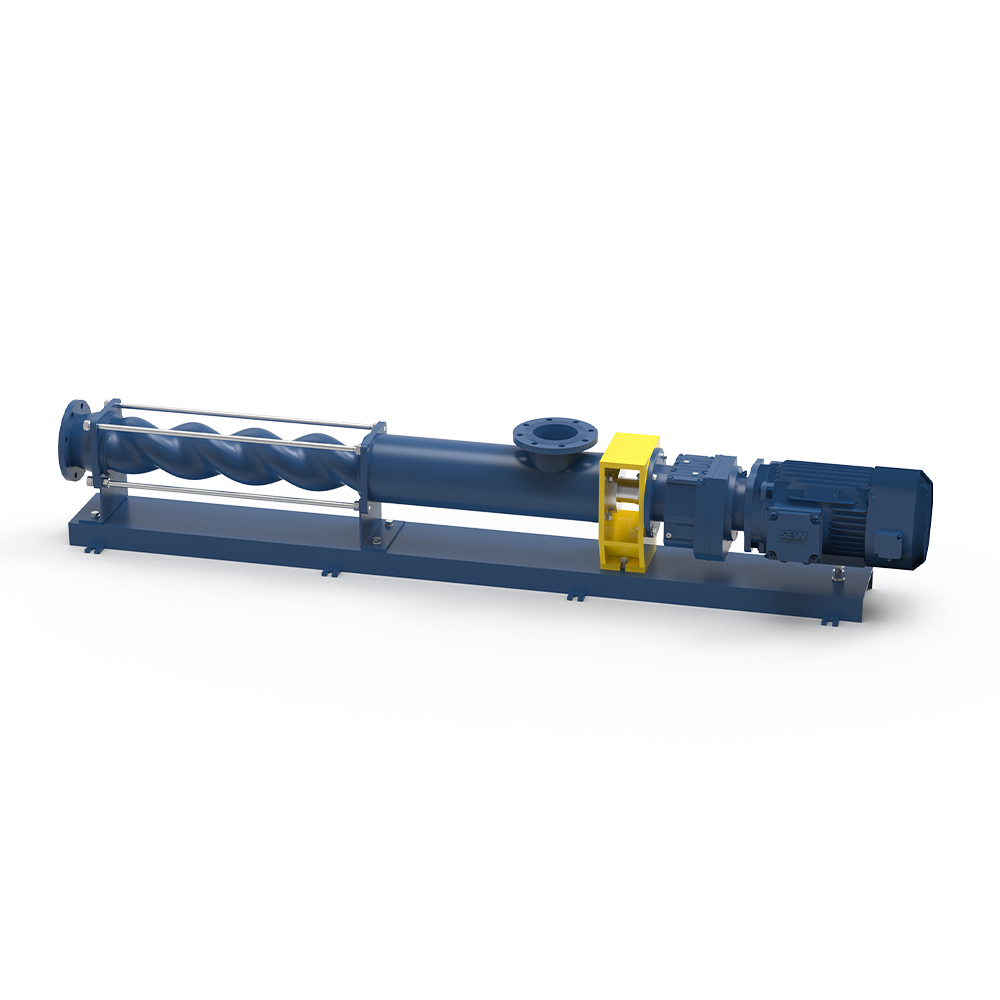 Equal Wall Thickness Screw PumpsThis screw pump has good self-priming ability, with water as the medium, suction on up to 3-5 meters; Conveying solid particles liquid: can convey liquid containing so...View Product →
It is not a universal upgrade. For intermittent, clean, low-abrasion duties the standard stator is entirely adequate and costs less. The equal wall thickness variant earns its place where the pump runs many hours per day, where the medium is abrasive, or where a shutdown to change a stator costs more than the stator itself.
When the medium carries fine solids that must pass without settling, the internal profile matters. A geometry that maintains a more uniform cavity along the length reduces the chance of particles bridging or accumulating in a dead zone. This is where T-type and similar fine-particle geometries come into play, typically in food processing, chemical slurry and light mining duties.
On the efficiency side, W-type designs target applications where the same flow is wanted from a smaller, slower unit. That is valuable in energy-conscious plants and in retrofits where the existing motor and starter have to be reused. The trade-off is that efficiency-optimised geometry tends to be less forgiving of dry running and of sudden changes in viscosity.
Direct connected builds remove the belt guard, the separate bearing frame and the alignment work that comes with them. They suit packaged skids, dosing rooms and installations where floor space is genuinely tight. The engineering requirement is a rigid baseplate and accurate alignment between motor shaft and pump shaft, because there is no flexible drive to absorb misalignment.
Truck mounted units take the same pump and place it on a mobile chassis, which changes the application entirely. Instead of a fixed pump station, the plant gets a unit that can be driven to a tank, a pit or a temporary transfer point and put to work without civil works.
Choose the construction variant from the wear and handling behaviour of the medium, not from the flow rate alone - two pumps with identical curves can have very different service lives.
Fixed pump stations assume the medium arrives where the pump is. That assumption breaks down in tank cleaning, temporary bypasses, emergency spill recovery, remote well sites, construction dewatering and seasonal agricultural work. In those cases the cost of piping the medium to a fixed station is higher than the cost of moving the pump to the medium.
A truck mounted progressive cavity pump addresses this directly. It carries its own drive, suction arrangement and discharge connection, and it can be positioned close to the source so suction lift stays within practical limits. The same low-shear, solids-tolerant behaviour that makes a stationary PCP useful on sludge applies on the mobile unit, which is why these machines appear in municipal maintenance fleets as well as industrial service contracts.
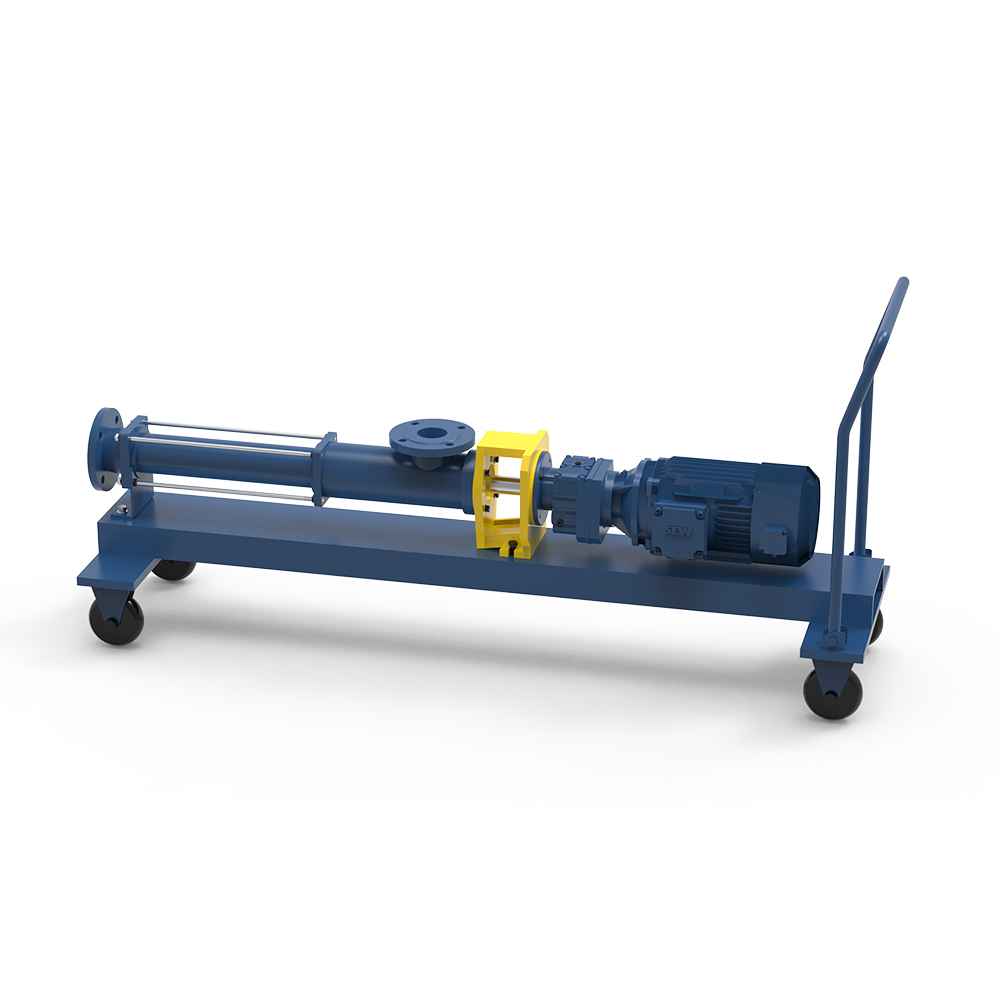 Truck-mounted progressive cavity pumpsVehicle-mounted pumps belong to the positive displacement pump, relying on the eccentric movement of the rotor and the stator fixed between the interference fit, the f...View Product →
When comparing a mobile unit with a fixed pump station, the analysis is rarely about purchase price. The relevant comparison includes civil works, piping runs, electrical supply to a remote location, and the labour cost of moving material to a fixed point. In many projects the mobile option pays back within a few campaigns, particularly where the same pump has to serve several pits or tanks in rotation.
Specification details still matter. Suction hose diameter, priming method, discharge pressure rating and the maximum particle size the pump can pass all determine whether the unit performs as expected on site. Buyers should also confirm the drive arrangement and whether the unit can run from a site generator, since remote locations rarely offer a clean, stable supply.
A mobile progressive cavity pump is justified whenever the medium cannot economically be brought to a fixed station, not simply when a portable option feels more convenient.
Most premature failures in progressive cavity pump applications trace back to installation or operating practice rather than to the pump itself. The following points cover the issues that appear most often in service reports.
Speed is the single most useful lever an operator has. Running a pump faster than necessary increases both the number of compression cycles per hour and the sliding velocity between rotor and stator. Both effects shorten elastomer life, and the relationship is not linear. A pump that lasts three years at 150 rpm may last barely one at 350 rpm on the same duty, even though the hardware is identical.
The counter-argument is that lower speed means a larger pump for the same flow. That is a real cost, and it needs to be weighed against stator replacement frequency, downtime and labour. On abrasive duties the calculation usually favours the larger, slower pump within the first two service intervals.
Set the pump speed from the wear budget rather than the flow requirement, and control flow with a variable frequency drive instead of a valve.
In any progressive cavity pump application, the stator is the consumable. It is designed that way: the elastomer is sacrificial so that the rotor, shaft and bearing frame survive. Understanding the wear progression makes maintenance planning far more predictable than reacting to failures.
The typical sequence starts with a slow decline in flow at constant speed, followed by a rise in discharge temperature and motor current as the fit between rotor and stator tightens and then loosens unevenly. Later stages bring increased vibration and eventually leakage at the seal or joint faces. Each of these signals is measurable, and a plant that tracks them can schedule a stator change during a planned shutdown instead of an unplanned one.
| Part | Function | Typical replacement trigger |
|---|---|---|
| Stator | Forms the sealed cavities with the rotor; provides the elastomer seal | Flow loss at constant speed, rising current, visible rubber damage |
| Rotor | Generates the pumping action; surfaces wear in abrasive service | Coating loss, dimensional change beyond tolerance, scoring |
| Extension shaft | Connects rotor to drive in deeper or longer pump configurations | Fatigue cracking, thread wear, misalignment symptoms |
| Seals and joints | Contain the medium at the stuffing box or mechanical seal | Drips, weeping, pressure loss, seal face damage |
 Stator for progressive cavity pumpsWe introduce advanced equipment and manufacturing processes from abroad, strictly follow the ISO quality system for production, ensure stable quality, and have our own...View Product →
Not every stator is the same rubber, and this is where a manufacturer with in-house compounding has a real advantage. Different formulations trade hardness, resilience, oil resistance, acid resistance and temperature tolerance against one another. A compound chosen for hot sludge is a poor choice for a solvent-bearing chemical stream, and a compound chosen for food contact is unlikely to be the most abrasion resistant option.
Buyers replacing a stator should supply the medium details, the operating temperature and the reason the previous stator failed. A supplier that simply matches dimensions without asking those questions is providing a part, not a solution, and the same failure will recur on the same schedule.
Many plants run pumps from a range of original manufacturers and need parts that fit without modification. Dimensional interchangeability, thread forms, flange standards and shaft coupling details all have to match. A supplier serving global markets usually maintains a database of these interfaces, which reduces the risk of a part arriving that almost fits.
Stocking policy matters too. Keeping one spare stator on site for a critical duty costs a fraction of a day of lost production, and it converts a repair into a maintenance task. For non-critical duties, a scheduled replacement interval based on measured flow decline is usually more economical than holding inventory.
Track flow at constant speed as the primary wear indicator - it starts falling long before the stator shows visible damage.
Progressive cavity pump applications are sensitive to build quality in ways that are not visible on a specification sheet. Two pumps with identical curves can differ substantially in stator life, which means the cheaper quotation is not always the lower-cost decision. The points below reflect what tends to separate a reliable manufacturer from a trading intermediary.
A manufacturer controls the rubber compounding, the rotor machining tolerance and the assembly quality, and can usually answer technical questions about wear behaviour from its own project data. A trading company can supply a pump but often cannot change a compound to suit an unusual medium. For routine duties the distinction may not matter much; for difficult applications it usually does.
Manufacturers who have delivered a large number of installations across several industries tend to have encountered the awkward cases: sludge that bridges, chemicals that swell rubber, slurries that destroy a stator in weeks. That experience shows up in the questions they ask during quotation. A supplier that asks about particle size, temperature and dry-run exposure before quoting is likely to deliver a pump that fits.
The total cost of ownership for a progressive cavity pump includes stator replacements, downtime, labour and, where relevant, energy. A pump that costs 20 percent more but delivers 50 percent longer stator life on an abrasive duty is usually the better purchase. Conversely, paying a premium for an equal wall thickness stator on a clean, intermittent duty is wasted money.
Delivery and logistics also belong in the assessment. A supplier with stable production capacity and convenient access to port facilities can commit to shorter lead times and handle export orders without delays, which matters for project schedules and for plants that cannot wait weeks for a replacement part.
Judge a supplier by the questions they ask about your medium, because that is the clearest indicator of whether the stator will survive the application.
Water and wastewater treatment is the largest single sector, followed by chemical and petrochemical processing, food and beverage production, pulp and paper, and oil and gas. Mining, agriculture and biogas also account for a steady share. The common thread is a medium that is viscous, solids laden, shear sensitive, or a combination of all three.
Yes, within limits. A PCP tolerates solids far better than a centrifugal or gear pump because particles pass through the cavity rather than across a narrow clearance. The practical limits are particle size relative to cavity width, solids concentration, and abrasiveness. For sand-laden duties, specify a coated rotor, a harder stator compound and a lower running speed, and accept that the stator will still be a regular consumable.
From water-like fluids at around 1 cP up to pastes in the 100,000 cP range, with speed reduced as viscosity rises. High viscosity reduces the pump's ability to self-prime, so suction arrangements often need a flooded inlet or a feeding auger. Above a certain viscosity, the pump works well but the flow per revolution drops, which affects sizing calculations.
Service life varies enormously with the application. In clean, low-abrasion duty with moderate speed, several years is realistic. In abrasive slurry at high speed, a stator may last only a few months. The variables that matter most are rotational speed, solids content, particle hardness and temperature. Reducing speed is the most effective single step toward longer life.
Not safely. The elastomer stator depends on the pumped medium for lubrication and heat removal, and running dry generates friction and heat very quickly. Short dry periods during priming may be tolerable, but continuous dry running will destroy a stator. Fit a level switch, a stator temperature sensor or a power monitor on the drive as standard protection.
Yes, and this is one of their less obvious strengths. Because flow is directly proportional to rotational speed, a PCP driven by a variable frequency drive delivers repeatable volumetric dosing. In water treatment and chemical plants this is often combined with a dispensing valve to improve accuracy and control at low flow rates. The limitation is that accuracy depends on the stator being in good condition, since wear changes the slip and therefore the delivered volume.
A standard stator has an elastomer wall that varies in thickness around the circumference, so compression and heat generation are uneven. An equal wall thickness design keeps the rubber section consistent, spreading the load more evenly and reducing hot spots. The result is longer life and more stable flow in continuous, abrasive or high-temperature duty. For light, intermittent service, a standard stator remains the more economical choice.
Start from the required flow and the pump displacement per revolution, then reduce speed as far as the economics allow. Lower speeds improve suction performance, reduce wear and lower heat generation, but require a larger pump for the same flow. On abrasive duties, the larger slow-running option usually pays for itself within two stator replacement cycles. The worst approach is to size for minimum capital cost and then run the pump at its maximum rated speed.
Most progressive cavity pump failures come down to three avoidable causes: dry running, excessive speed, and a stator compound that does not match the medium.
A few deeper dives are worth keeping alongside this guide, particularly if you are evaluating stator design options or comparing mobile units against fixed installations. The links below go into more specific detail on two decisions that come up repeatedly during specification.
Use this guide to screen an application, then use the detailed references to narrow the construction variant and supplier before the order is placed.
Step back from the detail and progressive cavity pump applications come down to a manageable set of decisions. Identify whether the medium is viscous, abrasive or shear sensitive. Confirm the solids content and particle size that will actually reach the pump, not the figure on the process diagram. Set the pressure stages from the duty point and the speed from the wear budget. Choose the stator compound from the chemistry and temperature. Then protect the pump against the two conditions that destroy stators fastest: running dry and running too fast.
Do those things and the pump becomes one of the least troublesome items on the plant. Skip them and the same pump becomes a recurring maintenance cost that nobody can quite explain. The difference between the two outcomes is usually a handful of questions asked before the order, not a difference in the hardware itself.
Specify progressive cavity pumps from the medium and the wear budget, and the application will run for years with nothing more than routine stator changes.
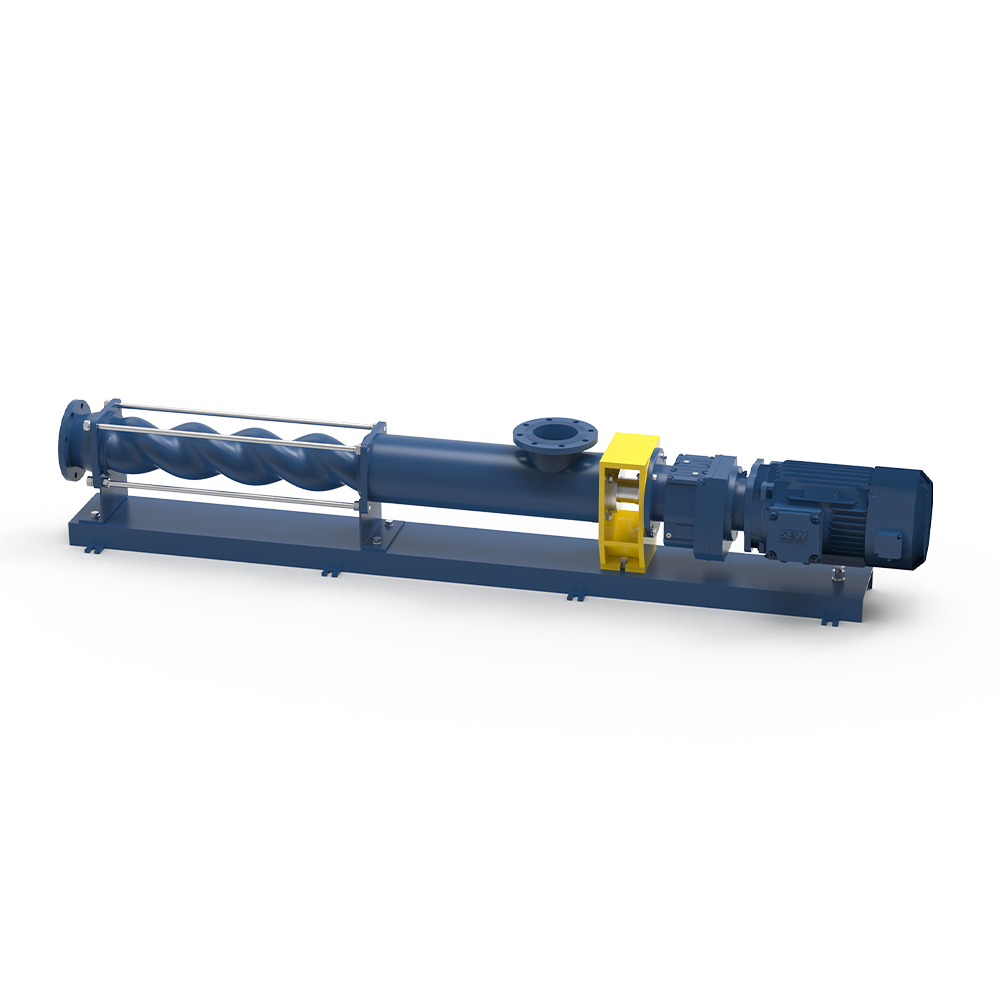
Screw pumps equipped with equal wall thickness stator, the same kind of pump specifications pump flow, and pressure are increased. The equal wall thic...
See Details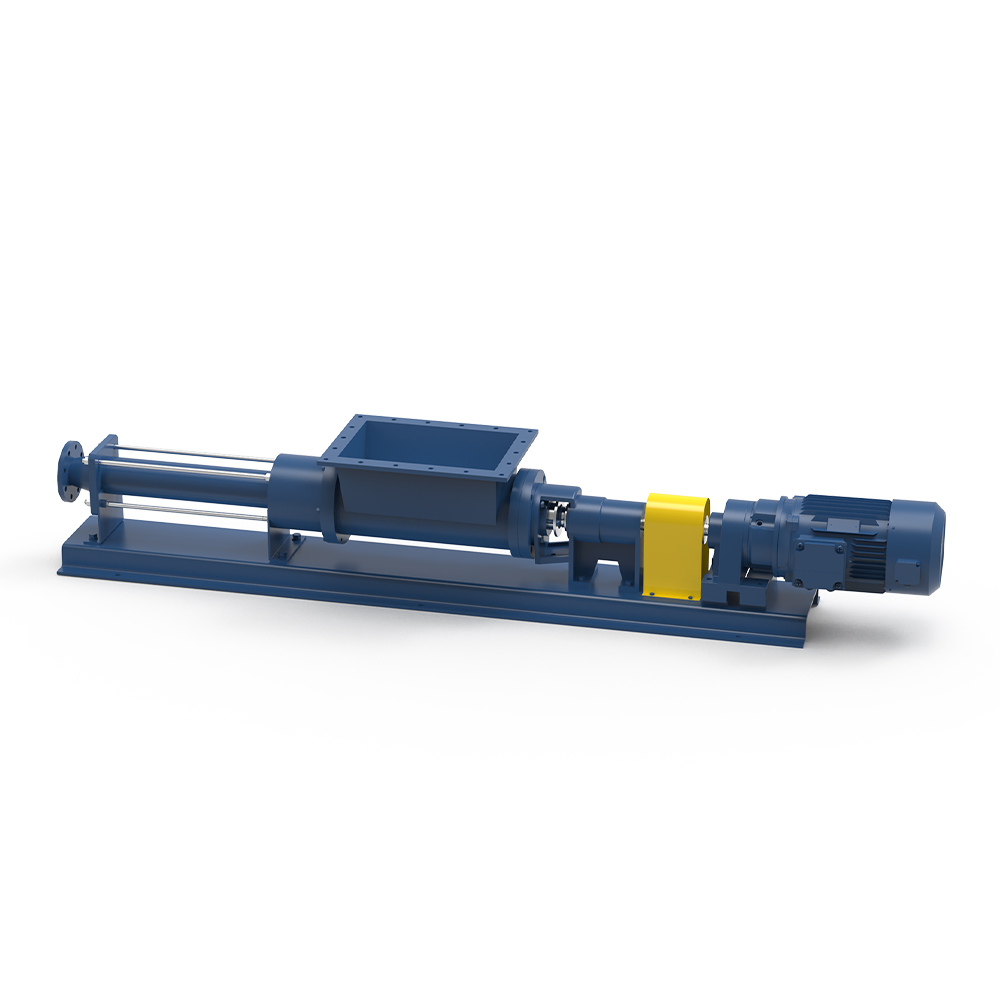
The inlet is a large hopper design W-type pump with a connecting shaft with multiple spiral vanes (which can effectively prevent the accumulation of m...
See Details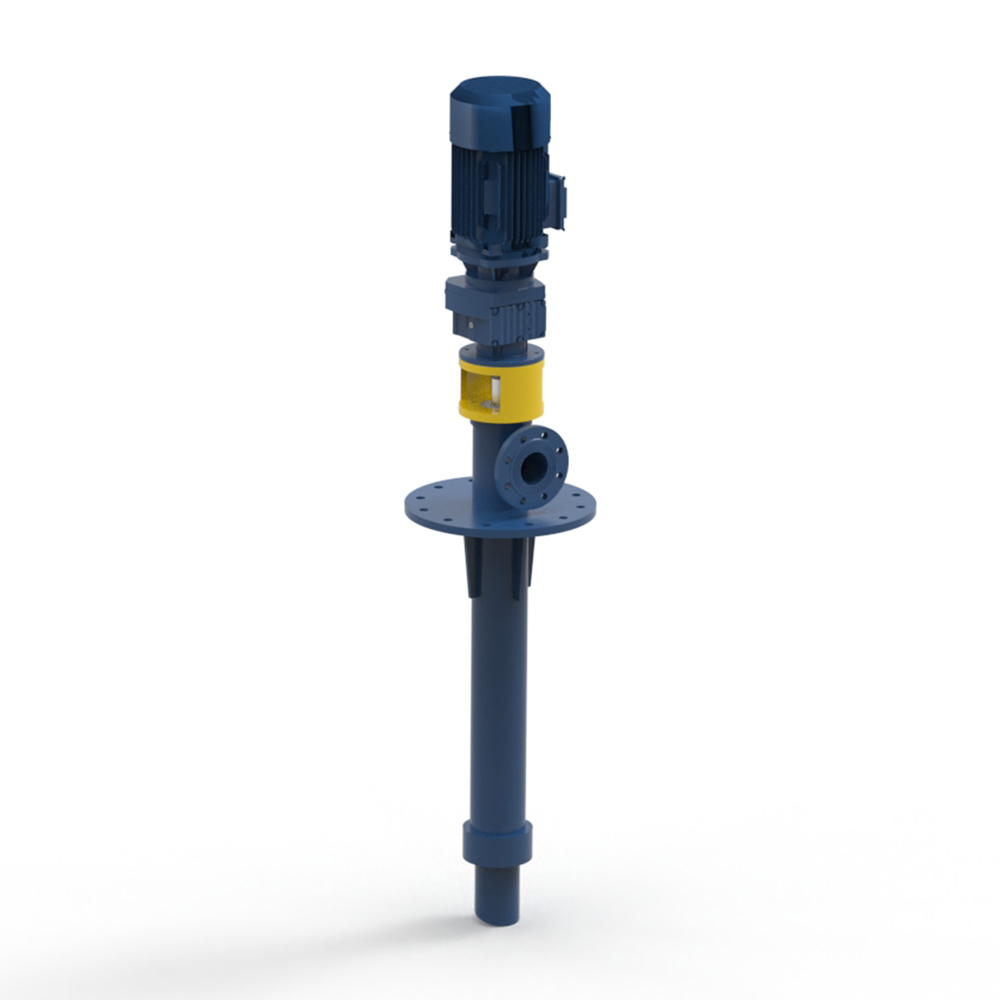
Mika vertical T-type screw pumps can be achieved through the length of the pump body to a variety of different depths of the pool, the pump's hopper i...
See Details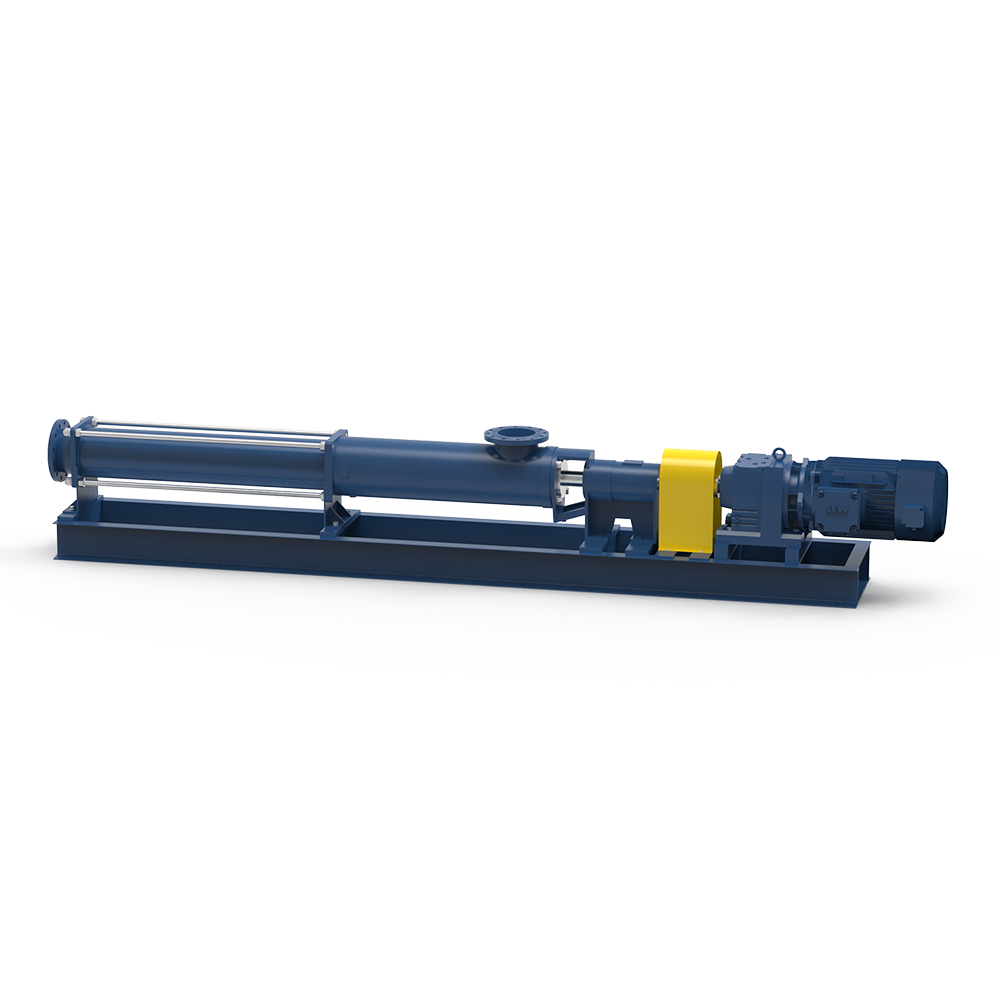
The S-pump with bearing frame support can withstand higher axial loads and can be used for high-pressure conditions, e.g. high-pressure sludge feed tr...
See Details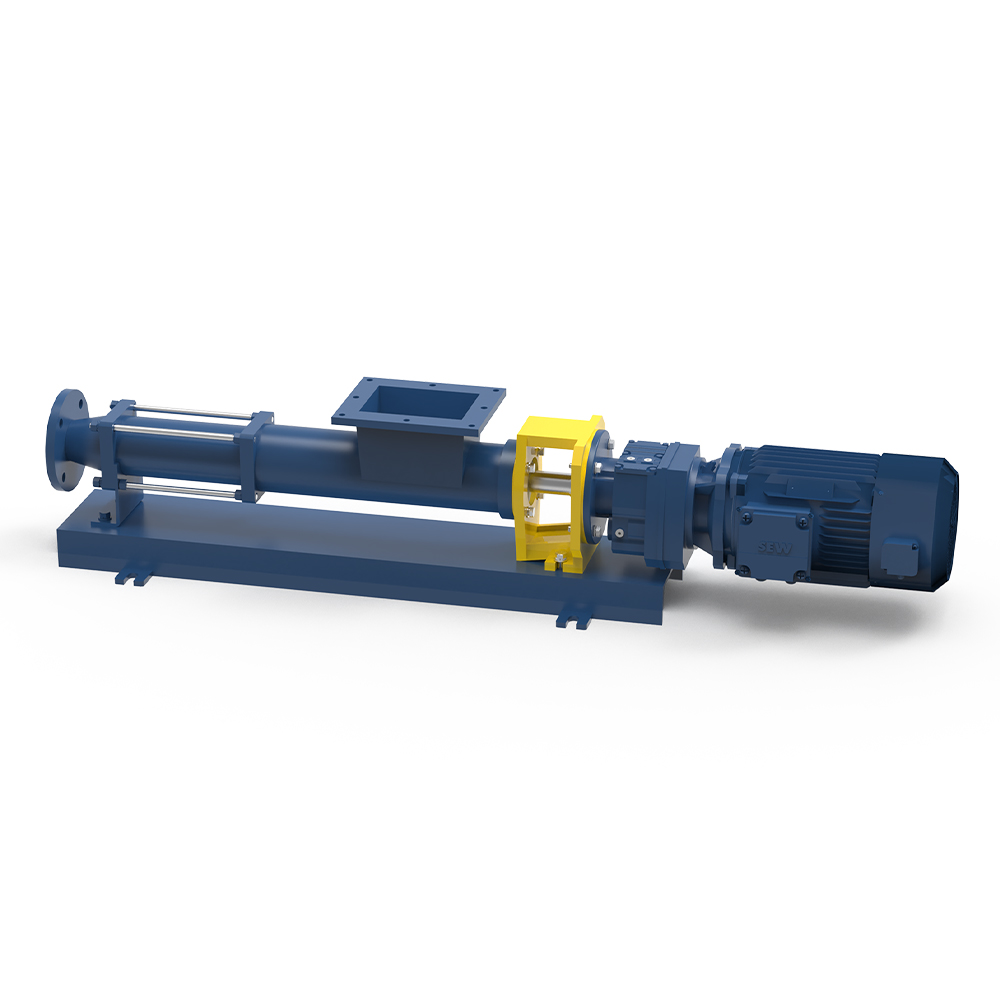
The inlet is a small rectangular hopper design H pump, suitable for conveying high viscosity solid content of less than 15% of the medium, such as cru...
See Details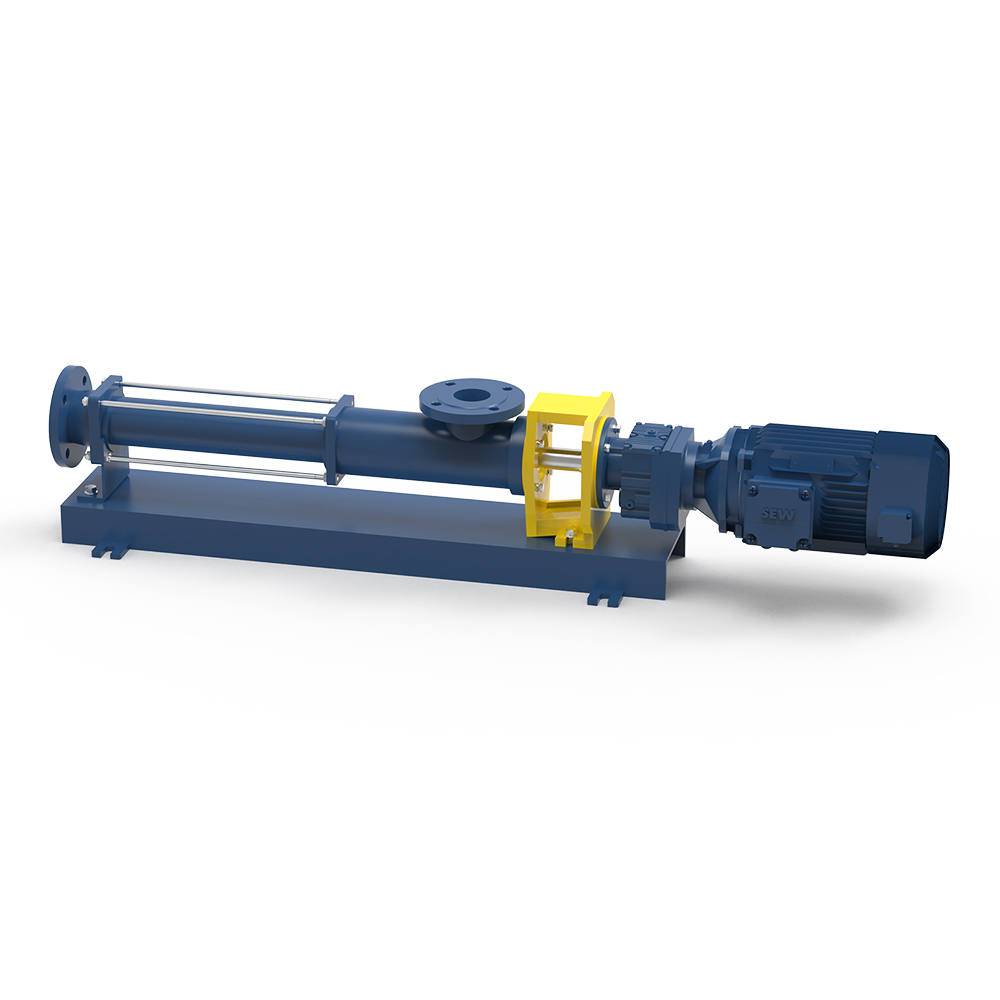
Mika Classic B direct-connected pumps are compact, easy to maintain, with low investment costs, and are suitable for a wide range of common working co...
See Details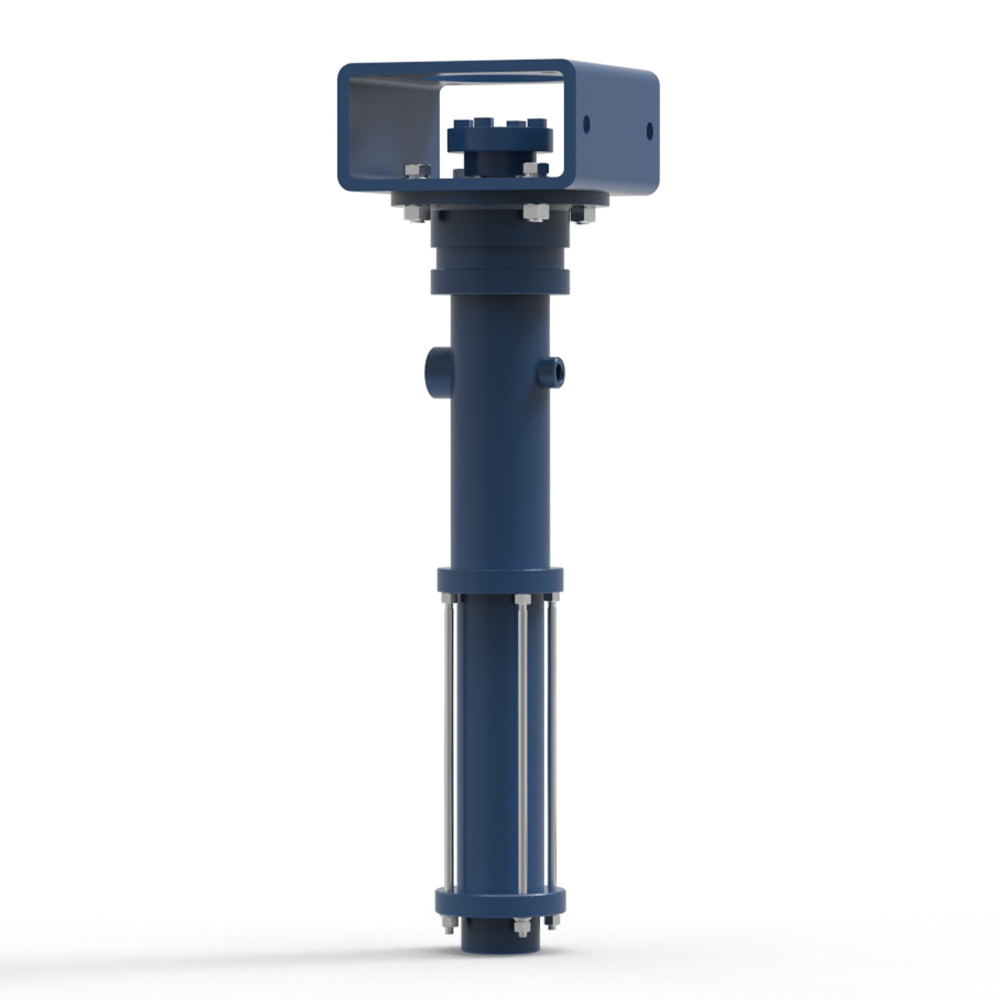
Precise flow rates and a wide range of materials for the metering and delivery of all kinds of sealants. Working Principle The MeiJia pump is a prog...
See Details
Various materials are available for different working conditions, such as NBR, HNBR, EPDM, and FKM.
See Details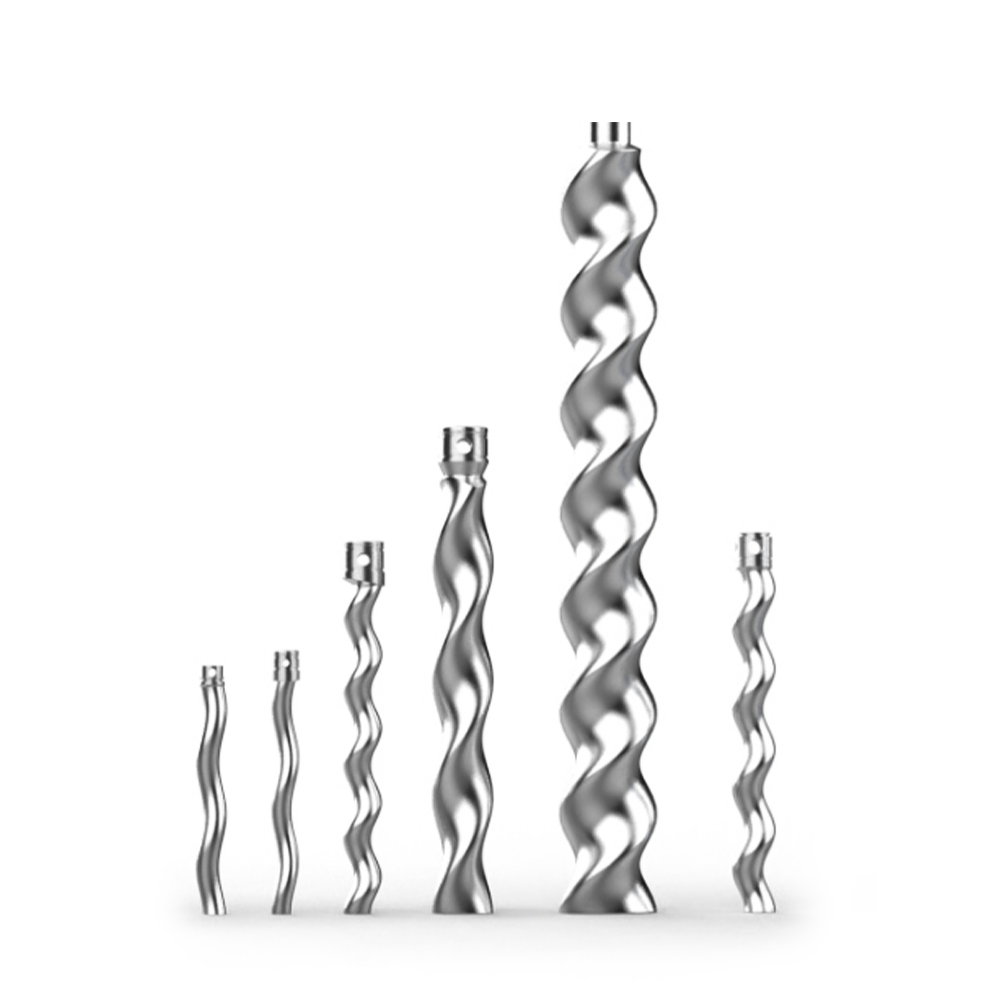
Multiple materials available, 304, 316L, 2205, rotor surface coating can be chrome plated or tungsten carbide sprayed.
See Details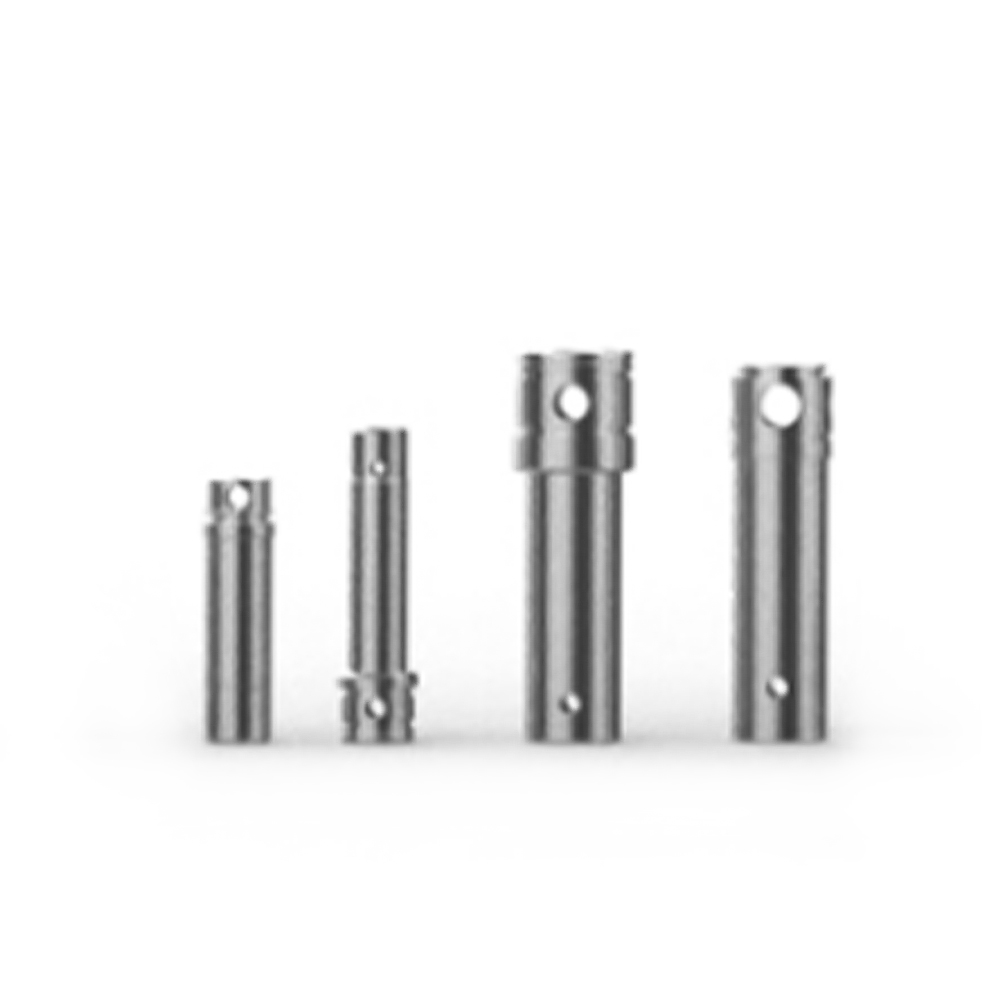
Multiple materials available: Q235,304,316L,2205,2507, etc.
See DetailsContact Us
Add: No. 36 Xintai Road, Economic Development Zone, Jingjiang City, Jiangsu Province, China
Tel: +86-13515167342
Fax: +86-523-84261117
E-mail: [email protected]
We'd love to
hear from you!
